

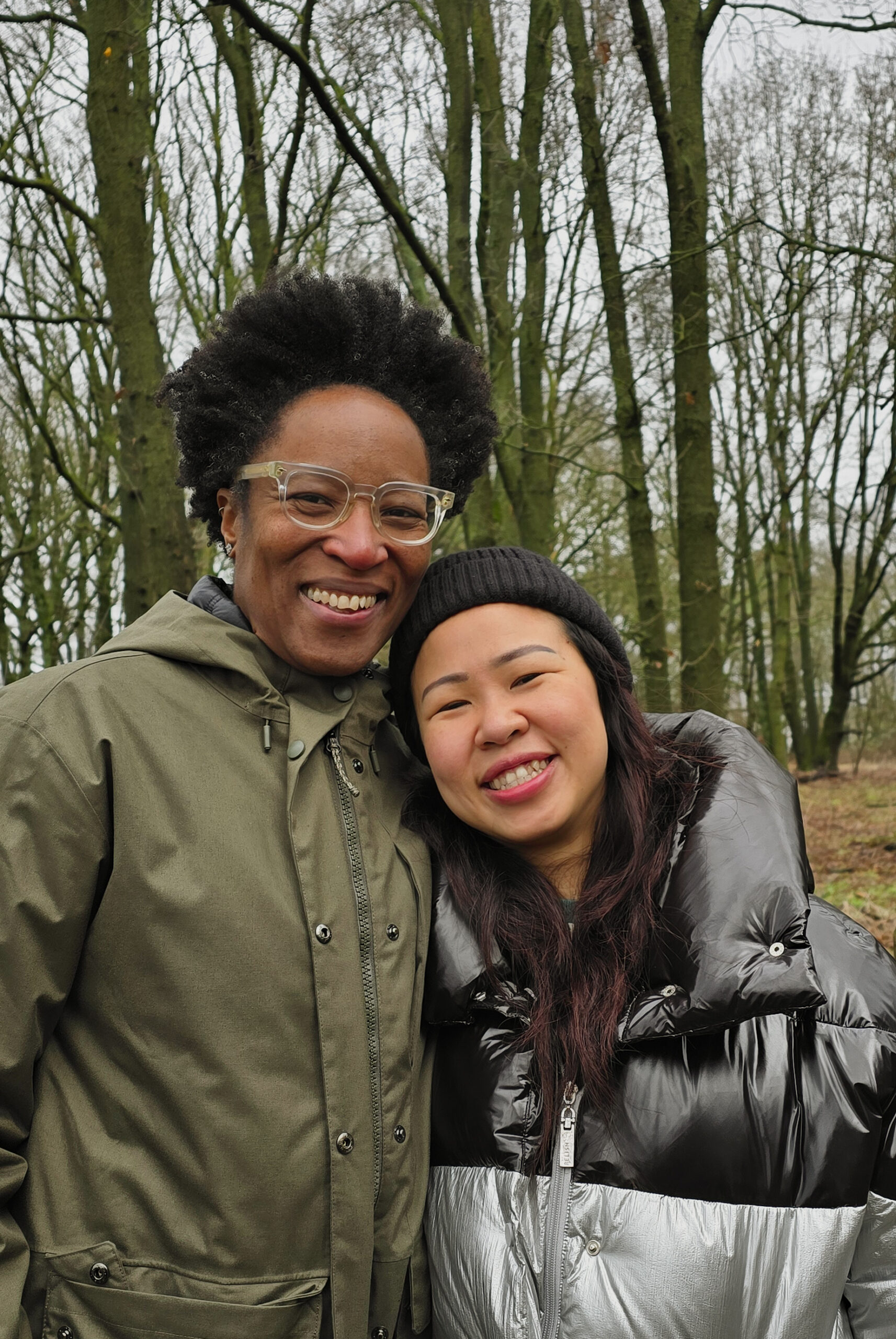
Last Sunday, when the sun was shining, I took a walk with my friend Fransisca Wijanarko. Even though we have known each other for a few years now, I was still curious about her experiences of living in different places since she was 14. What makes people feel connected? What makes a place truly feel like home? These were the questions on my mind.
A Journey Across Continents
As we walked through the peaceful nature of Nederweert-Eind, I asked her about her journey. She left her parental home in East Java, Indonesia, to study in New Zealand, where she lived for four years. After that, she spent 12 years in Singapore, followed by a year in different states across the U.S.
Then, she returned to Singapore before eventually settling in Weert, the Netherlands, where she now calls home. With all these different experiences, I wondered: What is the biggest challenge when adapting to a new country—the language barrier or cultural differences?
“It depends,” she said. “But the hardest might be the language barrier.”
The Challenge of Language and Culture
In New Zealand, she had to quickly catch up with English, as she didn’t speak it fluently when she first arrived. Fortunately, her English was good enough for her to enroll in a regular high school. In Singapore, the language was not an issue, as English is widely spoken. Interestingly, Singapore has four official languages: Malay, English, Chinese, and Tamil. Many public signs are displayed in both Malay and English.
This led us to a discussion about Singapore’s history. Today, it is known as a wealthy and developed country, but that wasn’t always the case. After being expelled from the Federation of Malaysia, Singapore was a struggling country with major social issues. I found it fascinating how the country transformed itself in just a few decades.
After 12 years in Singapore, Fransisca moved to the U.S. for a year, but despite speaking English fluently, she never felt at home there. I asked her why. “I missed the authenticity of the people ,” she admitted.
It wasn’t a language barrier this time—it was something deeper. After a year, she returned to Singapore, where she stayed for a few more years before making the Netherlands her new home.
Settling in Weert: A New Challenge
In Weert, however, she encountered a real language barrier, despite being married to a Dutch citizen. Cultural differences weren’t much of a surprise, but navigating daily life in a new language was a real challenge.
“When you move to a new country, there are so many small things you need to figure out on your own,” she explained. “When do you take out the garbage? Where do you find a doctor? These simple things can be overwhelming when you don’t speak the language.”
I asked her what could help non-Dutch-speaking residents feel more at home in Weert.
“It would be great to have welcome booklets that explain how to find your way around the city—just the basics,” she suggested.
Feeling at Home
Curious, I asked how she feels in Weert now.
“The people in Weert are warm,” she said with a smile. “If I say ‘hi,’ I get a friendly reply. I also love my job at the Munttheater Weert.”
She laughed as she shared a funny observation:
“Now that I’m a Dutch citizen, people automatically speak to me in Dutch—it’s like they recognize that I’m part of the pack!”
As we walked back to the car, she reflected on her journey.
“The Dutch language is an obstacle, but it’s important not to retreat into your own ethnic bubble, no matter how comfortable it feels,” she said. “Challenge yourself and connect with the locals.”
Her words stayed with me. Maybe home isn’t just a place—it’s the connections we build with the people around us.